Mclub World – Indonesia Internet Connection is less fast Than Neighboring Countries, this is the reason
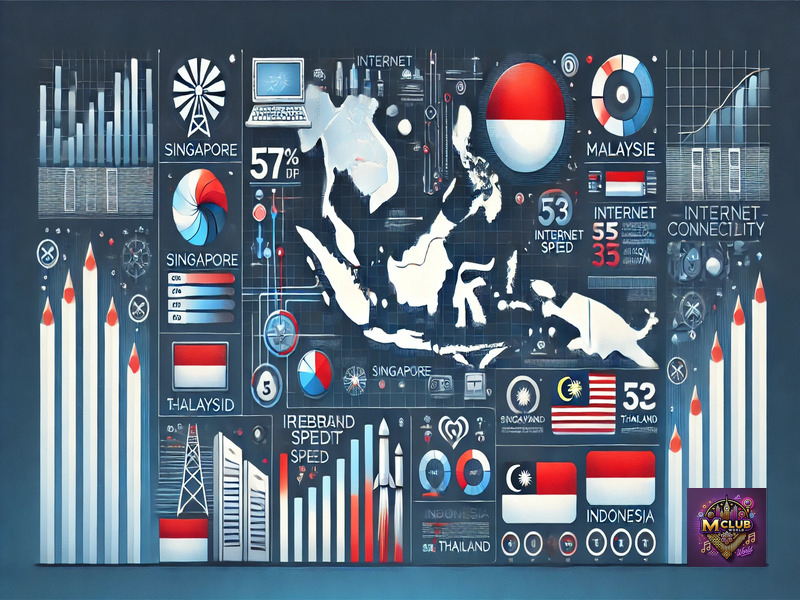
Indonesia has made strides in digital competitiveness. According to the World Digital Competitiveness Ranking (WDCR) 2023 by the International Institute for Management Development (IMD) in Switzerland, Indonesia climbed to 45th globally, a significant improvement from 51st in 2022. However, despite this progress, OpenSignal often ranks Indonesia among the lowest in Southeast Asia for fixed broadband speed.
Fixed broadband refers to high-speed internet delivered through fixed connections, such as cables or fiber optics, installed at specific locations. While Indonesia outpaces countries like India (49th), the Philippines (59th), and Mongolia (63rd) in digital competitiveness, it still lags far behind Southeast Asian neighbors like Singapore (3rd), Malaysia (33rd), and Thailand (35th).
Why does Indonesia internet speed remain slow compared to other countries in the region? Let’s explore some of the factors behind this issue.
“Read more: Tips for Healthy Eating Patterns for Diabetes Sufferers“
One major factor contributing to Indonesia’s slower internet speeds is the network capacity allocated by Internet Service Providers (ISPs). According to Mochamad Hadiyana, an expert in technology at the Ministry of Communication and Information Technology, ISPs often oversubscribe their services. This means they provide internet capacity that exceeds what users collectively need.
“As users share the service simultaneously, congestion occurs, leading to slower speeds. Shared bandwidth also contributes to reduced performance,” Hadiyana explained during a “Ngopi Bareng” session at the Kominfo office in April 2024.
ISPs play a crucial role in supplying internet to the public. However, oversubscription remains a significant issue affecting connection quality.
The quality of cables and fiber optics also impacts internet speed. Hadiyana noted that poorly maintained fiber optic cables can lead to signal attenuation, where signals weaken as the distance increases. This directly affects the speed and reliability of internet connections.
Proper infrastructure maintenance is essential to ensure optimal performance. However, inadequate attention to this aspect continues to hinder Indonesia’s internet speed progress.
The equipment used by ISPs and consumers, such as modems and routers, can also slow down internet speeds. Older or incompatible devices can create bottlenecks, limiting the efficiency of the connection.
“Operators face challenges in investing in newer infrastructure due to high costs associated with establishing and maintaining networks,” Hadiyana added.
Despite these challenges, he remains optimistic about Indonesia’s broadband future. “I’m confident that Indonesia can improve its broadband speed. My focus is not on rankings but on achieving significant improvements that enhance communication,” he emphasized.
“Read more : Israel’s Hamas war ends with conditions, read the full text of the agreement“
Although Indonesia is unlikely to rival countries like Singapore or South Korea in internet speed rankings anytime soon, steady progress is possible. Both government initiatives and private sector investments are crucial in addressing the issues outlined above. Improved infrastructure, better equipment, and strategic network capacity allocation can drive significant advancements.
As reported by M Club World, these improvements are vital for fostering economic growth and technological innovation. The focus should not solely be on competing with global leaders but on ensuring that Indonesians enjoy reliable and fast internet connections. For further updates on this topic, visit mclubworld.com.
Indonesia’s internet connection may currently lag behind its neighbors, but the country’s rising digital competitiveness indicates a promising future. Addressing key challenges such as network capacity, infrastructure maintenance, and equipment upgrades will be essential for improving internet speeds. As noted by experts and reported by M Club World, achieving these improvements can enhance communication and support Indonesia’s broader economic goals.
Mclub World, Jakarta - Laporan Nielsen 2024 menyebutkan 72 persen generasi Z di ibu kota kini menganggap interaksi sosial autentik…
Mclub World - Data terbaru dari Statista 2024 mengungkapkan bahwa pendapatan sektor bar dan klub malam global mencapai 33,4 miliar…
Mclub World, Jakarta - Laporan terbaru dari Dinas Pariwisata dan Ekonomi Kreatif DKI Jakarta pada kuartal kedua 2024 menunjukkan bahwa…
Mclub World, Jakarta - Sebuah survei internal yang dilakukan oleh komunitas nightlife pada akhir 2023 mengungkap fakta mengejutkan: sekitar 65%…
Mclub World - Industri hiburan malam di Tanah Air sedang berada di titik balik besar-besaran. Tren menunjukkan bahwa pengeluaran sektor…
Mclub World - Industri hiburan malam di Indonesia mencatat pertumbuhan signifikan sepanjang tahun 2024, dengan lonjakan transaksi sektor F&B di…
This website uses cookies.